If you experience an unpleasant tightness in your skin after showering, and a thick layer of limescale builds up on your favorite kettle within just a week, the problem isn't with your cosmetics or the quality of your appliances. All of these are classic signs of hard water. In Ukraine, especially in regions that draw water from artesian wells or the Dnipro River, this issue is familiar to many households. In this article, we'll break down what exactly makes water hard, how it affects your home and comfort, and what reliable, cost-effective solutions exist to solve this problem.
What Is Water Hardness, in Simple Terms
Water hardness is a measure determined by an excess of dissolved alkaline earth metal salts—primarily calcium and magnesium. Water becomes hard when it flows through limestone or gypsum formations, dissolving these minerals. According to Ukrainian standards, water with hardness up to 7 mg-eq/L is considered safe. However, you may start noticing the first negative household effects even at 3–4 mg-eq/L.
In cities like Kyiv, Dnipro, Kharkiv, or Odesa, tap water often has medium to high hardness levels. If you live in a private home and use well water, mineral salt concentrations can be even higher—and frequently accompanied by excess iron.
The Invisible Enemy of Your Beauty: Impact on Skin and Hair
Many people invest significantly in premium cosmetics, unaware that the main enemy of their beauty flows right from the tap. When hardness salts interact with soap, shower gels, or shampoos, they form insoluble compounds—so-called "soap scum."
- Dryness and skin irritation. A microscopic film strips away natural lipids, disrupting the skin's protective barrier. This leads to tightness, flaking, and redness. For those with sensitive skin, hard water often triggers flare-ups of dermatitis.
- Dullness and brittle hair. The insoluble residue coats hair strands, preventing cuticles from lying flat. Hair loses its shine, becomes rough, tangles easily, and breaks during brushing.
- Faster color fading. Hair dye washes out much more quickly with hard water, forcing more frequent salon visits.
The Main Threat to Household Appliances and Plumbing
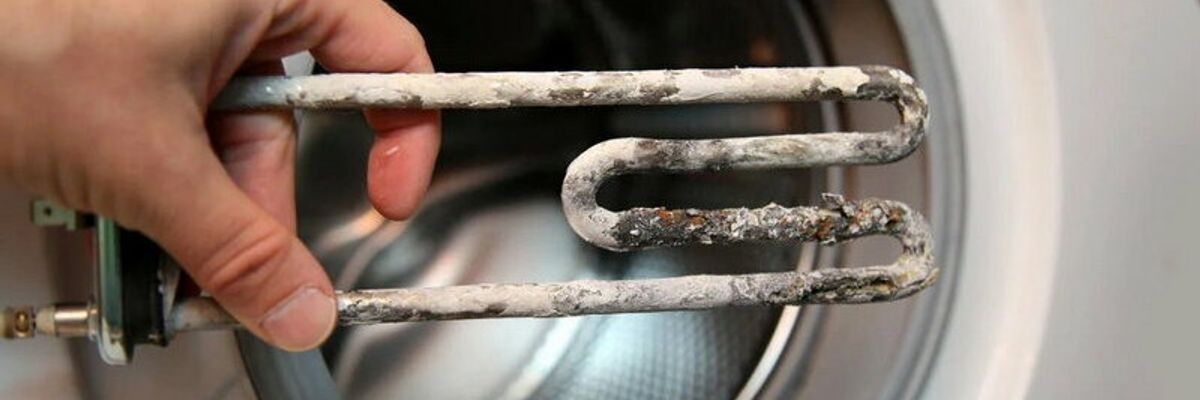
While effects on skin may not be immediately obvious, appliances react to hardness salts right away. Limescale (calcium carbonate) is a hard insulator that builds up on internal components.
A limescale layer just 1.5 mm thick reduces the thermal conductivity of heating elements (TENs) by 15–20%. Appliances start consuming more electricity, running longer cycles, and ultimately overheating. This is the leading cause of premature failure in water heaters, washing machines, and dishwashers. Additionally, fabrics suffer: they lose elasticity, become coarse, and white items develop a grayish tint.
How to Test Water Hardness at Home
To determine whether you need additional water treatment, watch for these household indicators:
- Visual inspection. White spots on glass surfaces, tiles, or fixtures after water droplets dry.
- Soap test. If soap or shower gel lathers poorly and is hard to rinse off, leaving a slippery or "squeaky" feeling on your hands—your water is hard.
- Kettle condition. White flakes in the water or crust buildup on the kettle bottom after just a few boils.
- Laboratory analysis. The most accurate method, essential for private homeowners with wells before selecting a whole-house filtration system.
Which Filters Help with Hardness: Choosing the Right Solution
Fighting limescale with vinegar or citric acid is only a temporary fix. To eliminate the problem permanently, you need to address its root cause. The right solution depends on your goal: protecting appliances or obtaining great-tasting drinking water.
Protecting Plumbing and Household Appliances
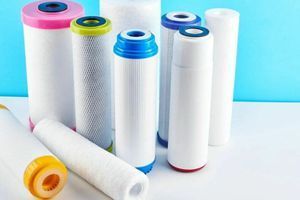
To safeguard your water heater, washing machine, and premium faucets from limescale, install whole-house (mainline) filtration systems at the water entry point to your apartment or home. These systems use ion-exchange resin or polyphosphates. Specialized cartridges for mainline filters replace calcium and magnesium ions with safe compounds that don't precipitate when heated. This maintains appliance efficiency and saves you money on repairs.
Ideal Drinking Water for Your Family
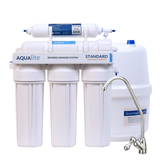
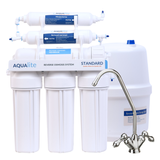
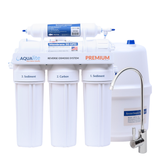
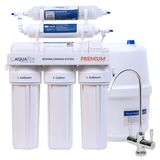
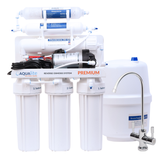
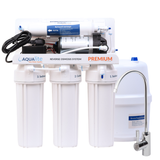
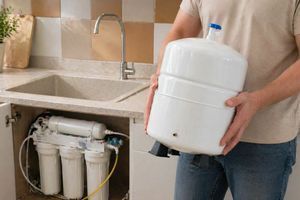
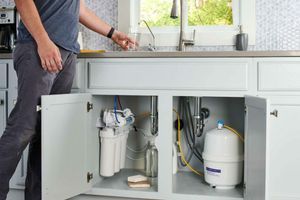
To protect your body from the inside and prepare better-tasting meals, modern water filters—particularly reverse osmosis systems—are ideal. The reverse osmosis membrane removes up to 99.8% of dissolved hardness salts. As a result, your kettle stays limescale-free, and tea or coffee reveals its true flavor without off-notes. To enhance taste post-filtration, these systems often include a mineralizer that restores a natural balance of beneficial trace elements.
Common Mistakes When Tackling Limescale
- Using a pitcher filter for very hard water. The softening cartridge in a pitcher has very limited capacity. With high hardness, it stops working within a week—meaning you'd essentially be drinking untreated water.
- Relying on boiling as the primary method. Boiling only removes temporary hardness; permanent hardness remains, and some salts simply precipitate into sediment you may later pour into your cup.
- Ignoring maintenance schedules. Even the best ion-exchange resin in a mainline filter eventually exhausts its capacity. It's crucial to replace cartridges on time or regenerate them with salt solution, if the system design allows.
Summary
Hard water isn't just an aesthetic issue like residue on your faucet. It causes daily discomfort for your skin and leads to recurring expenses on appliance repairs. Investing in a quality water purification system pays for itself quickly through savings on electricity, laundry detergents, and cosmetics. For comprehensive home protection, the best approach combines mainline filters for appliance protection with an under-sink reverse osmosis system for drinking water needs.
Frequently Asked Questions
Is it harmful to drink hard water?
Hard water isn't toxic and doesn't cause poisoning. Calcium and magnesium are natural minerals essential for the body. However, excess salts can impair beverage taste, create sediment in tea and coffee, and cause household inconvenience. For daily consumption, most families prefer reverse osmosis water due to its softness and purity.
Will a regular pitcher filter prevent limescale in my kettle?
A pitcher can temporarily reduce salt levels, but its capacity is very limited. If your water has high hardness, the pitcher's cartridge will exhaust its resource within days or weeks. For consistent limescale protection, stationary under-sink filters or whole-house softening systems are more effective.
How often should I replace the softening cartridge in a mainline filter?
Service life depends on initial water hardness and consumption volume. On average, an ion-exchange cartridge lasts 1–3 months for a family of 3–4. If you notice white residue reappearing on fixtures, that's the primary signal that the cartridge has exhausted its capacity and needs replacement.