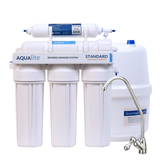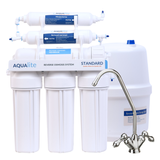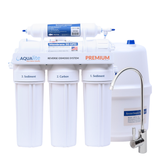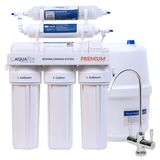
The taste of tea, the aroma of coffee, the quality of soup, and even the sensation after a glass of plain water — all of this depends on what exactly flows from your tap. Many people notice that their water has a chlorine aftertaste, leaves limescale in the kettle, or leaves a strange sediment at the bottom of a glass, yet they get used to it and continue drinking it every day. In this article, we'll explore how drinking water quality at home actually affects your daily life, what signs indicate something's off with your water, and which household solutions help you get tasty, clean water without constantly buying bottled.
Drinking Water Quality: What Actually Ends Up in Your Glass
Tap water undergoes centralized treatment, but on its journey to your apartment it travels through kilometers of pipes, many of which were installed decades ago. This is why even after quality treatment at the facility, water can pick up additional "bonus" contaminants along the way.
Most commonly, tap water contains:
- Chlorine and its compounds — residual from disinfection processes that create a characteristic odor.
- Mechanical impurities — sand, silt, rust particles from aging infrastructure.
- Iron — often visible as a reddish tint or metallic taste.
- Hardness salts — responsible for limescale buildup in kettles and fixtures.
- Organic compounds — can affect both taste and water clarity.
In homes with wells or boreholes, this list often expands to include manganese, hydrogen sulfide, nitrates, or excessive mineralization. That's why water treatment approaches differ between apartments and rural properties.
How Water Affects Your Overall Well-being
Water is something we consume daily and in large quantities. It goes not only into our glasses but also into tea, coffee, soup, porridge, compote, and ice for drinks. Therefore, its taste and purity directly impact the daily habits of the entire family.
Here are several practical benefits most people notice after installing a filter:
- Better-tasting beverages. Tea and coffee without chlorine aftertaste reveal their true aroma.
- More enjoyable food. Soups and porridges made with filtered water have a cleaner taste.
- Greater desire to drink water. When water tastes good, both adults and children are more inclined to drink it, which is important for normal well-being.
- Less limescale. Kettles, coffee makers, irons, water heaters, and dishwashers last longer.
- Savings on bottled water. A family of 3-4 spends a considerable amount on bottled water annually, whereas a home water filter typically pays for itself within a few months.
So clean drinking water at home is primarily about comfort, taste, household convenience, and peace of mind about what you're giving your family every day.
Signs That Your Home Water Has Problems
You can tell that water needs additional filtration even without laboratory testing. Just pay attention to a few household indicators.
Be concerned if:
- Your kettle quickly develops a thick layer of limescale.
- Water has a noticeable odor or chlorine aftertaste.
- Sediment or flakes appear in a glass after standing.
- Rusty or white stains remain on plumbing fixtures.
- Laundry looks dull or grayish after washing.
- Skin feels dry after showering and hair feels rough.
- Tap water is occasionally cloudy or contains rust particles.
If you notice even 2-3 items from this list, it's time to seriously consider choosing a filter. For a more accurate picture, especially in a private home, it's better to have your water tested — this will help you select a system tailored to specific contaminants rather than guessing.
What Solutions Help Improve Water Quality
Today there are several main types of household solutions, and each addresses its own set of tasks.
Pitcher Filter
A simple and portable option. Suitable for rental housing, cottages, or as a temporary solution. Reduces chlorine odor, improves taste, and traps some mechanical impurities. However, the cartridge has limited capacity, and for hard water, a pitcher's capabilities are usually insufficient.
Under-sink Flow-through Filter
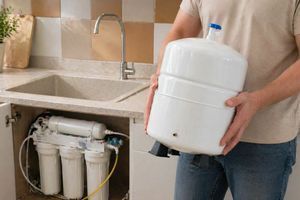
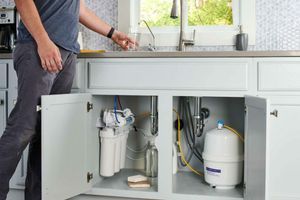
A stationary system with multiple filtration stages. Works well with chlorine, aftertastes, and mechanical impurities. Takes up little space and is convenient for daily use. Suitable for apartments with relatively stable tap water.
Reverse Osmosis System
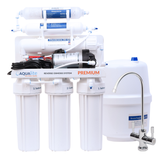
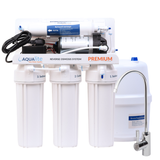
The deepest level of filtration among household solutions. The membrane retains the vast majority of dissolved substances, while a mineralizer restores the water's familiar taste. This system is suitable for families with children, for regions with hard or problematic water, and for those who want consistently tasty drinking water without buying bottled.
Main/Whole-house Filter
Installed at the water inlet to an apartment or house. Protects plumbing, washing machines, and water heaters from mechanical impurities and rust. This is a basic filtration level that works well in combination with a drinking water filter under the sink.
How to Choose a Filter for Your Needs
To avoid overpaying and get exactly the result you need, it's worth answering a few simple questions.
1. Where does your water come from?
For apartments with centralized water supply, a flow-through filter or reverse osmosis system is usually sufficient. For homes with wells or boreholes, it's better to select a system after water testing.
2. What problems do you notice?
Chlorine odor — you need a carbon cartridge. Limescale — consider water softening or reverse osmosis. Rust and sand — a mechanical cartridge or main filter is necessary.
3. How many people are in your family?
This determines the required system capacity and cartridge replacement frequency. For families of 3-4, under-sink stationary systems are typically chosen.
4. What's your maintenance budget?
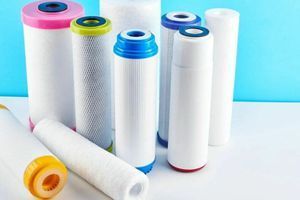
It's important to consider not only the system's price but also the cost of regular cartridge replacements. Properly selected filter cartridges are the key to stable system performance.
5. Do you need mineralization?
If choosing reverse osmosis, consider a mineralizer: it restores the water's familiar natural taste that most people prefer.
Common Mistakes to Avoid
Even a quality system will perform poorly if you make a few common mistakes.
- Buying a filter without considering water quality. What works for one location may not be suitable for a well in another area.
- Delaying cartridge replacements. An exhausted cartridge doesn't just filter worse — it can become a source of problems itself.
- Skimping on proven components. Cheap alternatives often don't meet their stated specifications.
- Ignoring system pressure. Stable pressure is important for reverse osmosis; sometimes a pump is needed.
- Expecting a "miracle" from a filter. No household system makes water perfect without maintenance, and none replaces water testing for well water.
Summary
The quality of drinking water at home affects the taste of beverages and food, the condition of household appliances, and the daily comfort of the entire family. You should pay attention when limescale appears, there's a chlorine odor, or a strange aftertaste develops. For apartments, flow-through filters or reverse osmosis systems are most often chosen; for private homes, a comprehensive solution after water testing is recommended. In the Aqualite catalog, you can select a water purification system and replacement cartridges for various tasks and get tasty drinking water at home without unnecessary hassle.
Frequently Asked Questions
Is it worth drinking water straight from the tap if it has no visible odor?
Even if water is clear and has no strong odor, it may contain dissolved substances that aren't detectable by taste. For peace of mind, it's better to install at least a basic drinking filter or have your water tested.
What's better: buying bottled water or installing a filter?
For a family that consumes water daily, owning a filter is usually cheaper and more convenient within the first year of use. Bottled water makes sense where installing a stationary system isn't possible.
How do you know if a filter is doing its job?
Key indicators include consistent taste and water clarity, no limescale in the kettle, and normal flow from the tap. If something changes, first check the cartridge replacement schedule.
Is reverse osmosis suitable for children?
Reverse osmosis systems with mineralizers are often chosen specifically by families with children, since the membrane retains most dissolved impurities while the mineralizer restores the water's familiar taste.
How often does a home filter need maintenance?
Prefilters are typically replaced every 3-6 months, post-filters and mineralizers every 6-12 months, and reverse osmosis membranes every 1.5-3 years. Exact timing depends on water quality and consumption volume.